
What if all that’s standing between you and your business is fear? This is Standard bank‘s tagline to its on going competition, My Fearless Next which promises the winner a year’s salary to pursue their side hustle full time. This competition is proof that there is value in side hustles. So much value that even the banks have started to notice and want in on the financial benefits. What if I said to you that all that is standing between you and your side business is your lack of accountability to yourself?
I am amazed at the number of people that do not take their side gigs seriously. For some people it is just something that they do and when the money comes, they are happy to spend it as they wish. I am also surprised by the number of people with side hustles but who do not account for what they do with the income from their hustle.
Having run four side gigs before, I know the value in taking yourself seriously as a person in business, regardless of the size of your business. And often that value is seen in how you operate your business or side hustle. Side hustles gave me great leverage when it came to my personal finances, specifically savings and investments.
Side gig 1: Bookkeeping

Reconciling a clients’ books
I ventured into the world of side gigs in 2008 soon after completing my articles. I had a small bookkeeping business doing people’s books on a monthly basis. The business had two regular clients and several ad hoc once off clients. It was the once off projects that brought in the money.
I banked most of the money I made from this business and later used it to start investing in the stock market. I remember in my first year of the side hustle I made R50k and the following year I managed to double that income. The best thing was that I didn’t have huge operating costs as I was operating from home. All I needed was a laptop, printer and a few stationery items. And as a result the net profit from this side hustle was sizeable.
Side Gig 2: Buying and selling shares
I used the bookkeeping income to start investing in the stock market (buying and selling shares listed on the JSE). Once I got into trading stocks, the stock market became a place for me to keep any extra cash that I had. It was also a fun way to learn how the stock market works, with money that I could afford to lose. Trading in the stock market enabled me to grow my capital to an extent that I started looking at other avenues to grow my net worth (what you own (assets) less what you owe other people (liabilities)).
Side gig 3: Investing in property

Residential property investment
Two years later in a quest to diversify (not putting all my money in one type of investment) my investments and income, I bought my first property. This was an exciting venture for me and it made me feel like an adult. I did not buy the property cash but had sufficient cash flow to pay the deposit, transfer fees and other related costs. As a result I didn’t have to borrow this money over and above the mortgage bond.
I stayed at this property for less than a year before I started letting it. I felt that my money could start working for me as I had converted my property into an asset. This was visible each month when I did the accounts as I was making a profit and the property was cash flow positive. Once I started understanding how property investments worked I moved on to other things. Bigger things!
Side gig 4: A vending machines business
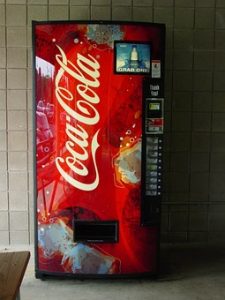
Cold drink vending machine
In 2013 I bought a vending machines business. The business owned seven vending machines providing snacks in six different locations. I kept overheads low by doing the work myself and enlisting the help of family members sometimes. Between my husband, sister and myself we would buy the stock, restock the machines, do stock count, month end cash ups and banking and handled customer complaints. It was a good way to learn about business, people and people’s attitudes towards money and food. I found the seller of this business on Gumtree, contacted them and the rest is history.
It was exciting for me because I could put to practice what I was doing at work at the time – deal making. I did a mini due diligence including a site visit of all the locations. I felt like I was doing a take-over transaction. In actual fact it was. The thing about this business is that I found it at the right time. I had looked at buying new vending machines before and decided that it wasn’t worth it mainly because of the significant upfront cash outlay for an untested location.
Funding the acquisition of this business wasn’t an issue as I already had money saved up and growing in the stock market. Even if I needed funding to buy these machines, it would have been easy for someone to fund me because I already had a track record of being disciplined with money. I had a bookkeeping business with its own accounts and which was self-sufficient. I had money invested which I could offer as security if I needed to borrow. Alternatively I could sell some of the shares and use that cash to pay a deposit for the machines. I ended up buying the seven machines for cash.
You are probably wondering why I am writing this post. I want to encourage those that have a side hustle to not undermine their graft. There are many ways of undermining your side hustle. And if you have not thought of starting a side hustle I would like to encourage you to consider it too.
Here are my key signs that you don’t take your side hustle seriously:
- You don’t hold yourself accountable about what you do with the fruits of your labour.
- After a client pays you, you don’t record that money anywhere and tend to proceed to spend it without giving it a second thought.
- Not keeping track of the costs involved in rendering your service (data, petrol, your time and other personal resources).
- You do not keep and maintain adequate records of your trade.
- You are not knowledgeable about the tax benefits you and or your business are eligible for.
- An unawareness of the implications of declaring a zero income tax returns on your business’ future prospects.
- You do not have a trusted business adviser to address your financial and tax needs.These are small things that can put all your effort into your side hustle to waste.
 Unless you monitor the businesses’ performance and are intentional about that and its development, you may never know if your side gig is worth pursuing on a full time basis.Your side hustle could easily be your best way out of debt and or into financial independence. It could also be your opportunity to finally leave your boring employer. But because of poor financial habits you may never get to realize those dreams.
I am keen to know what side hustle you are involved in. What motivated you to pursue your side hustle? Have you been able to consistently measure the financial rewards from your business?
August 20, 2018 at 9:19 am
I need to start taking hustle seriously. Thank you for this wakeup call 🙂
August 20, 2018 at 6:15 pm
Thanks. With small measureable steps you can surely get there. The point is to start and put mechanisms to measure what you are doing.
August 20, 2018 at 7:59 pm
Interesting. Your side hustle journey encouraged me to start mine which has now turned into my main hustle.
I now need another side hustle to come from this main hustle for a bit of cash injection into the main hustle which is still growing.
August 22, 2018 at 6:54 pm
So glad to hear that. Even happier to know that Balanced Books Boutique is still operating and you are still pushing your hustle. I am of the view that so long as you keep moving and keep actioning those things on your to do list, eventually something will happen. The value is in the actual doing of things. Good luck with the main:)
September 3, 2018 at 9:30 am
Hi Avhaathu, your blog is very inspiring. I purchased a food truck several months ago and started a food, take away business as my side hustle ( pizzas ina cone and other food items ) besides, the once a month music festival, my trailer sits at home and should be generating income on a daily basis somewhere. This article is really a wake up call that I should start working on networking so that I can find a suitable location
September 3, 2018 at 8:03 pm
Wow Tanya that is a really interesting business. Are you SA based? Which city? If SA, have you thought of a location close to a government building? They tend to have a lot of employees and are often keen on buying lunch/ breakfast. You already have the trailer so imagine the additional income that would come with a little extra effort. I am happy to hear that you found the blog post useful. Thanks.